

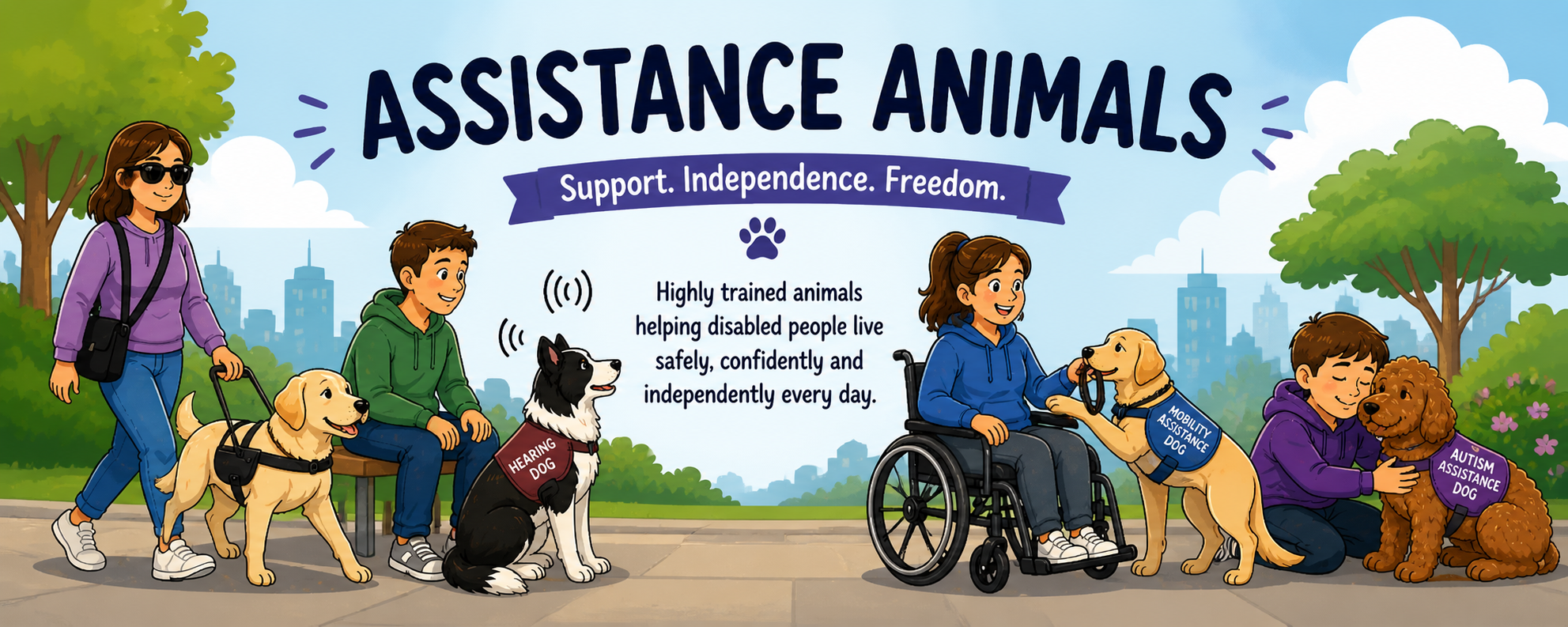
Assistance Animals
What Are Assistance Animals?
Assistance animals are specially trained animals that assist people with disabilities. They can help with physical, sensory, psychiatric, intellectual, or other mental disabilities. The term encompasses various roles, including guide dogs, hearing dogs, service dogs, and emotional support animals.
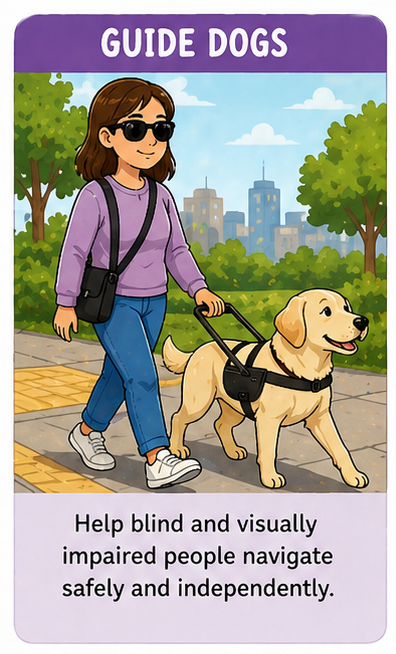
Guide dogs play a vital role in supporting blind and visually impaired people to navigate the world safely and independently.
Specially trained to guide their handler around obstacles, stop at curbs, and respond to commands, these dogs provide both practical assistance and increased confidence in everyday life.
Beyond mobility, guide dogs also offer companionship and emotional support, helping individuals feel more secure and connected when travelling, working, or simply going about their daily routines.
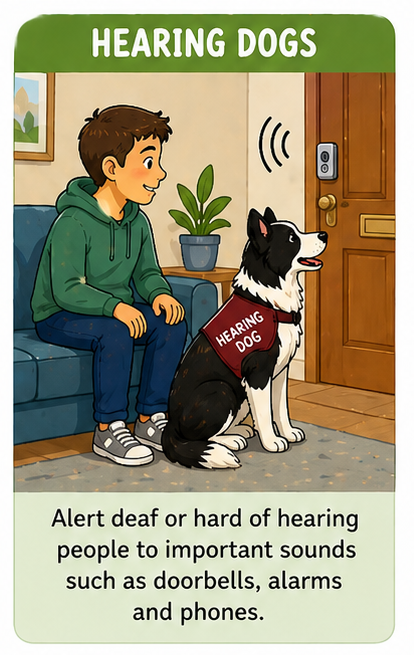
Hearing dogs provide essential support for people who are deaf or hard of hearing by alerting them to important everyday sounds such as doorbells, alarms, and ringing phones.
Specially trained, these dogs use clear signals—such as nudging or leading their owner—to draw attention to sounds that might otherwise be missed.
This support helps increase safety, independence, and confidence at home and in daily life, while also offering companionship and reassurance.
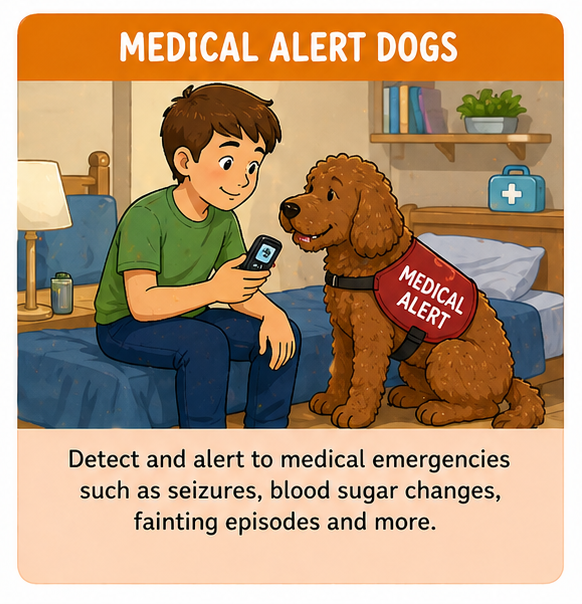
Medical alert dogs provide life-changing support by detecting and responding to serious health conditions before or as they happen.
These highly trained dogs can sense changes in the body—such as shifts in blood sugar levels, the onset of seizures, or signs of fainting—and alert their owner or others to take action.
This early warning can be crucial in preventing emergencies or reducing their impact, helping individuals feel safer, more confident, and more independent in their daily lives.
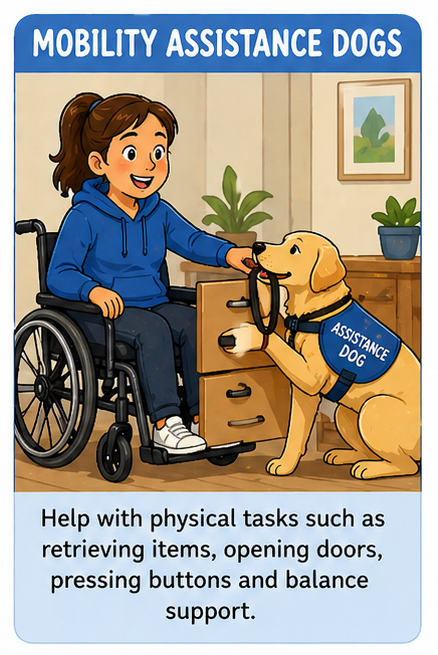
Mobility assistance dogs provide practical, everyday support to people with physical disabilities, helping them carry out tasks that might otherwise be difficult or impossible.
These highly trained dogs can retrieve items, open doors, press buttons, and even offer balance and stability when moving around.
By assisting with these daily activities, mobility assistance dogs help increase independence, confidence, and safety, allowing individuals to navigate their environments more easily and live more independently.
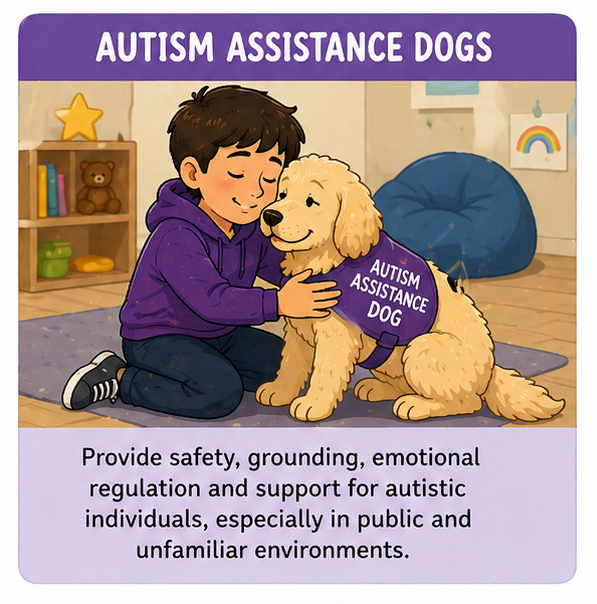
Autism assistance dogs provide vital support for autistic individuals by helping with safety, emotional regulation, and navigating everyday situations.
These specially trained dogs can offer calming reassurance during moments of anxiety, help prevent wandering, and provide a sense of stability in busy or unfamiliar environments.
Their presence can make public spaces feel more manageable, while also offering companionship and comfort, helping individuals build confidence and independence in their daily lives.