
Misconceptions in Disability
Challenging Stereotypes and Changing Perspectives
Disability is often misunderstood due to outdated stereotypes, lack of awareness, or assumptions. These misconceptions can create barriers, exclusion, and stigma in everyday life.
By learning more and listening to lived experiences, we can help create a more inclusive community.
Learn more: https://www.scope.org.uk/about-us/social-model-of-disability/
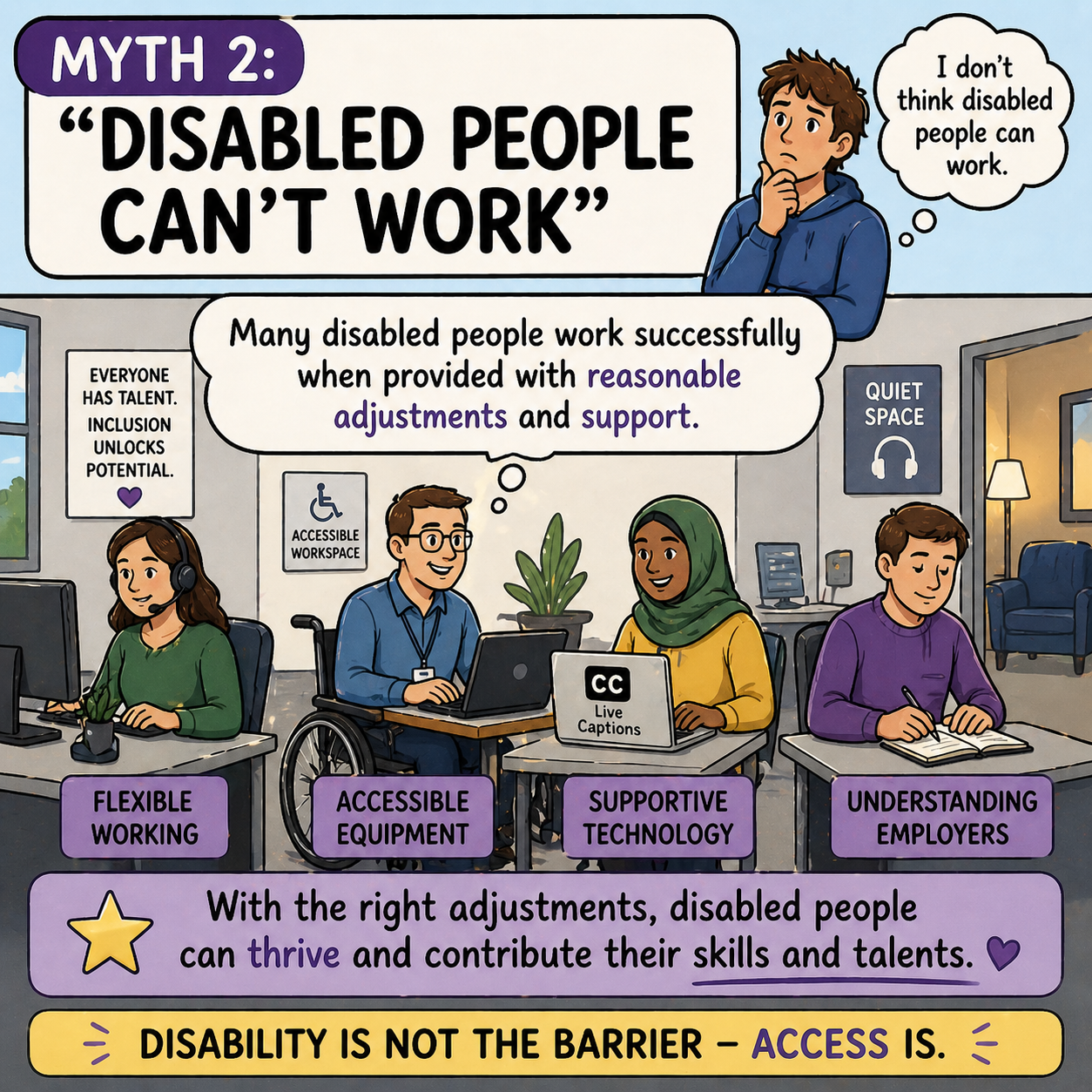
Disabled people succeed in all areas of life, including education, careers, sport, and the arts.
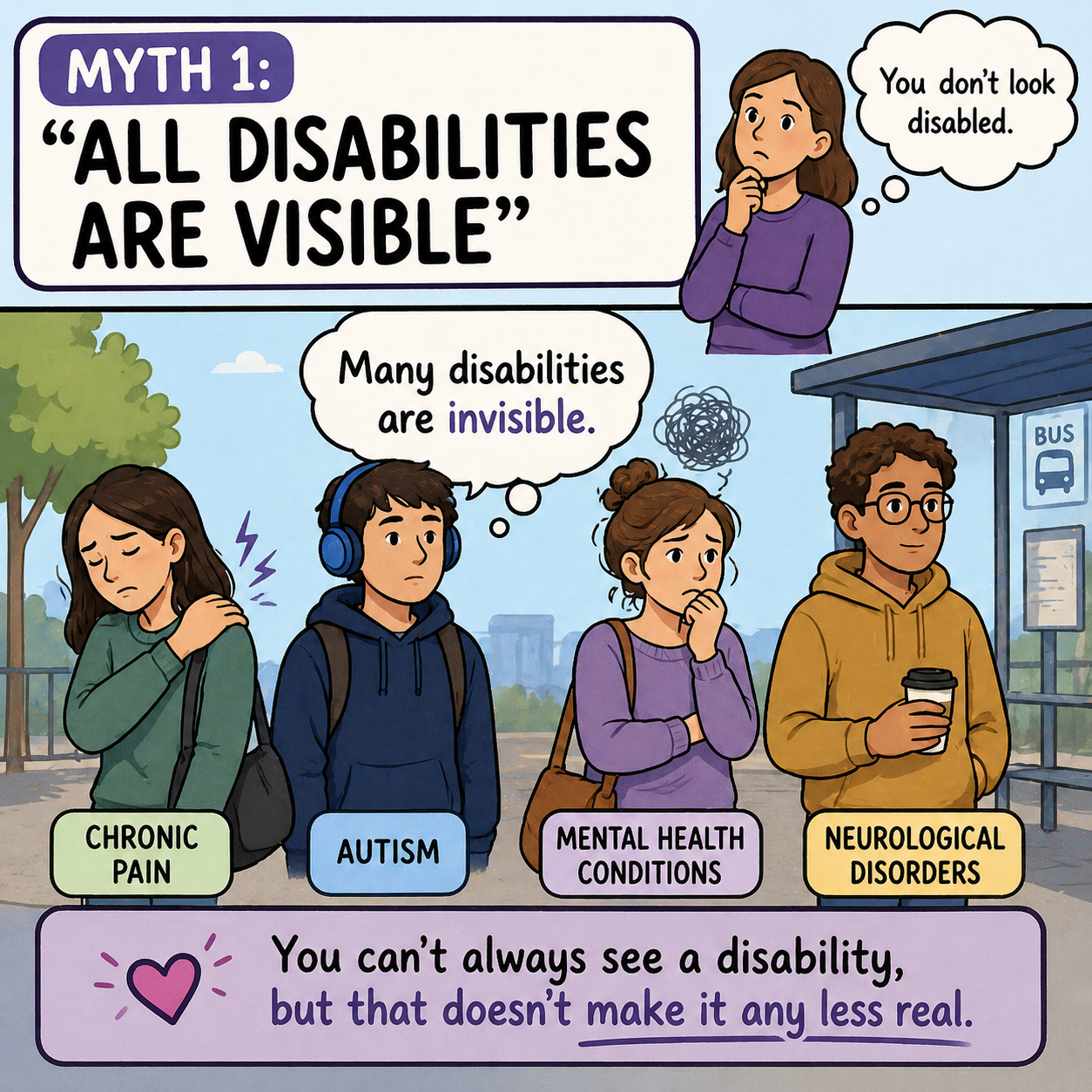
Many disabilities are invisible, such as:
Chronic pain
Autism
ADHD
Mental health conditions
Epilepsy
Diabetes
Learn more: https://hiddendisabilitiesstore.com/
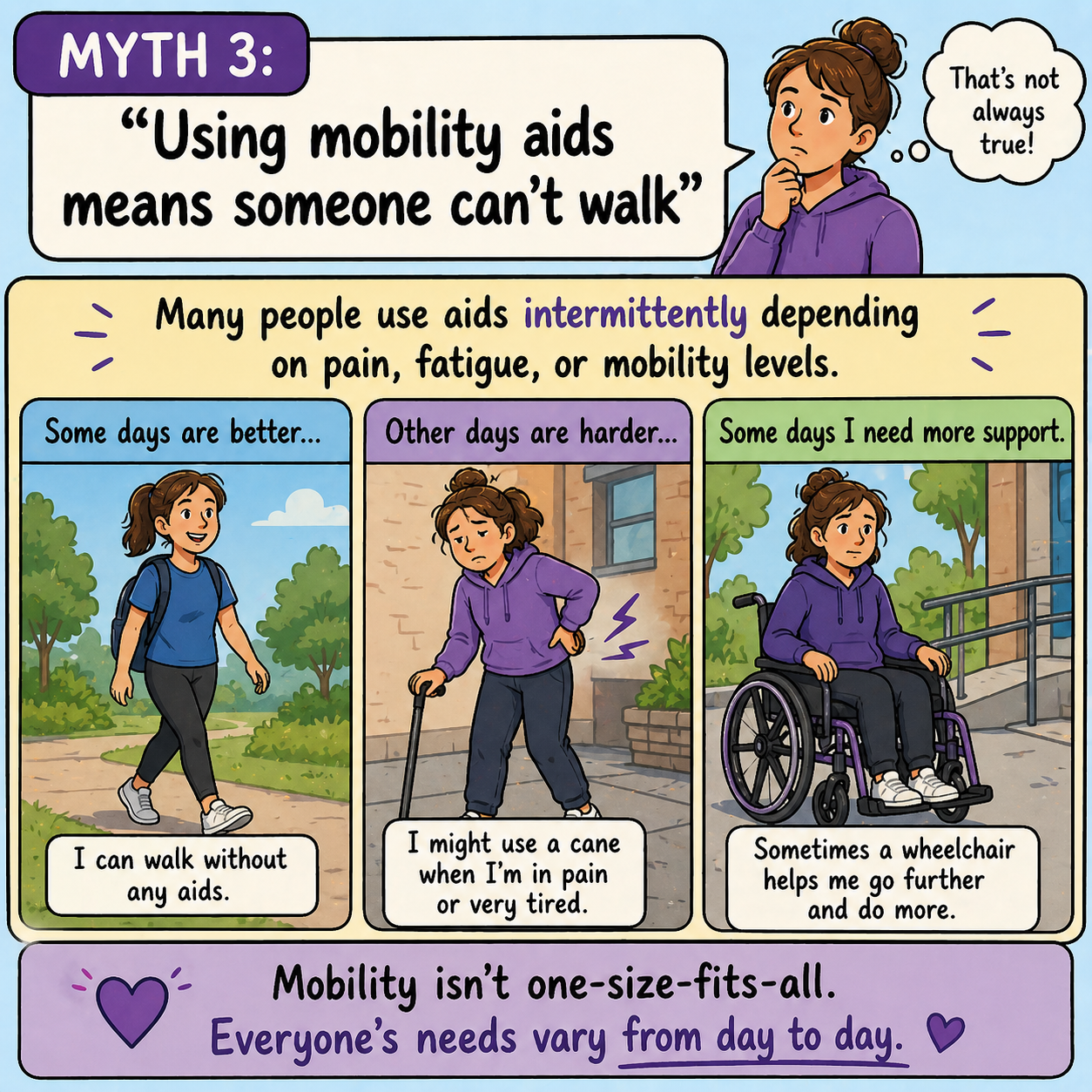
Mobility is not one-size-fits-all, and using a mobility aid does not mean someone is unable to walk.
Many people use aids like canes or wheelchairs intermittently, depending on factors such as pain, fatigue, or how their condition affects them on a particular day.
Some days, a person may move around with support, while on others they may need extra assistance to stay safe, conserve energy, or maintain independence.
Mobility aids are not a limitation—they are tools that help people do more, go further, and live more comfortably, reflecting the reality that everyone’s needs can change from day to day.
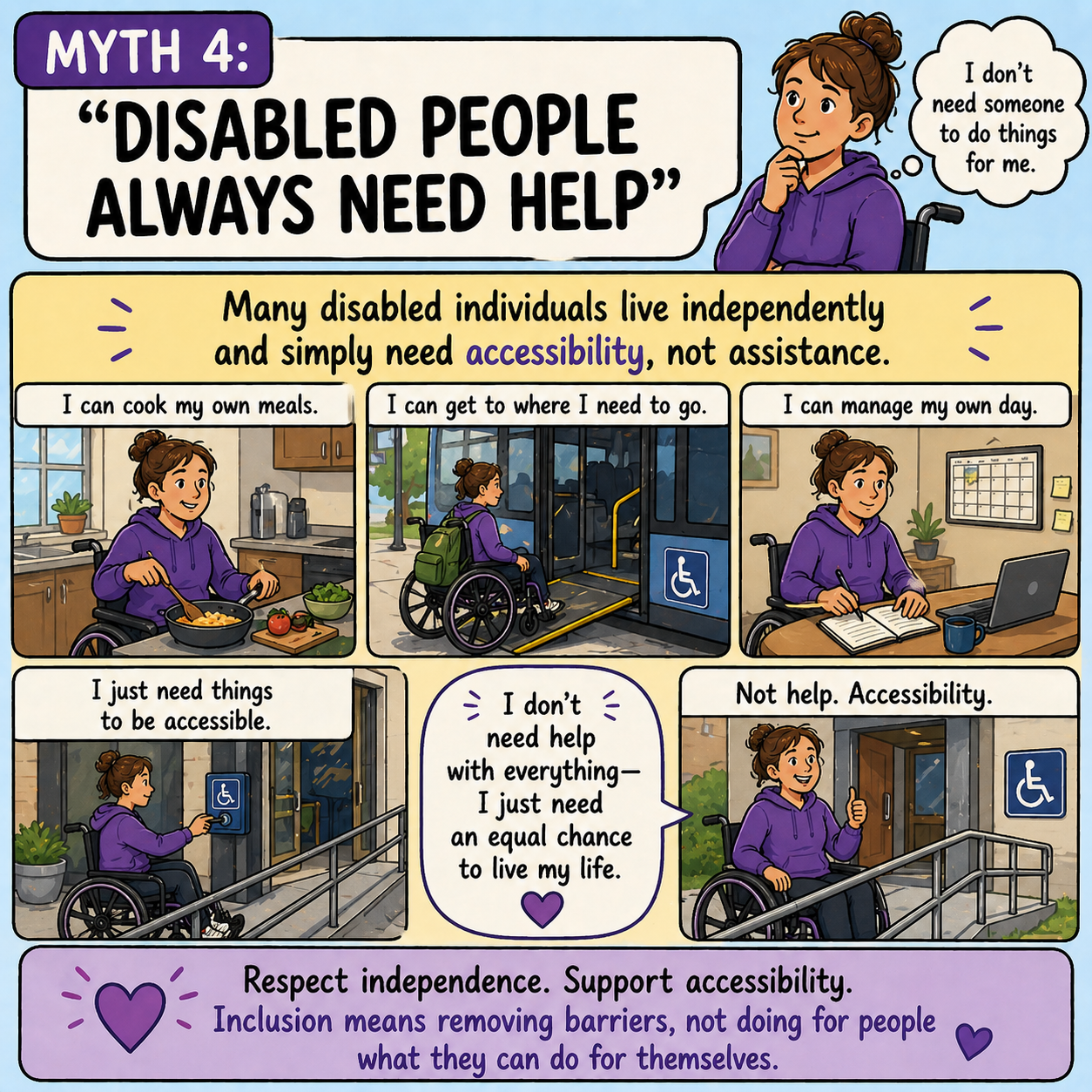
The idea that disabled people always need help is a common misconception, as many disabled individuals live independently and manage their daily lives without assistance.
Rather than needing constant help, what is often needed is accessibility—things like step-free access, inclusive transport, and environments designed for everyone.
With the right adjustments in place, people can cook, travel, work, and organise their lives just like anyone else.
Independence should be respected, and true inclusion comes from removing barriers, not assuming people cannot do things for themselves.
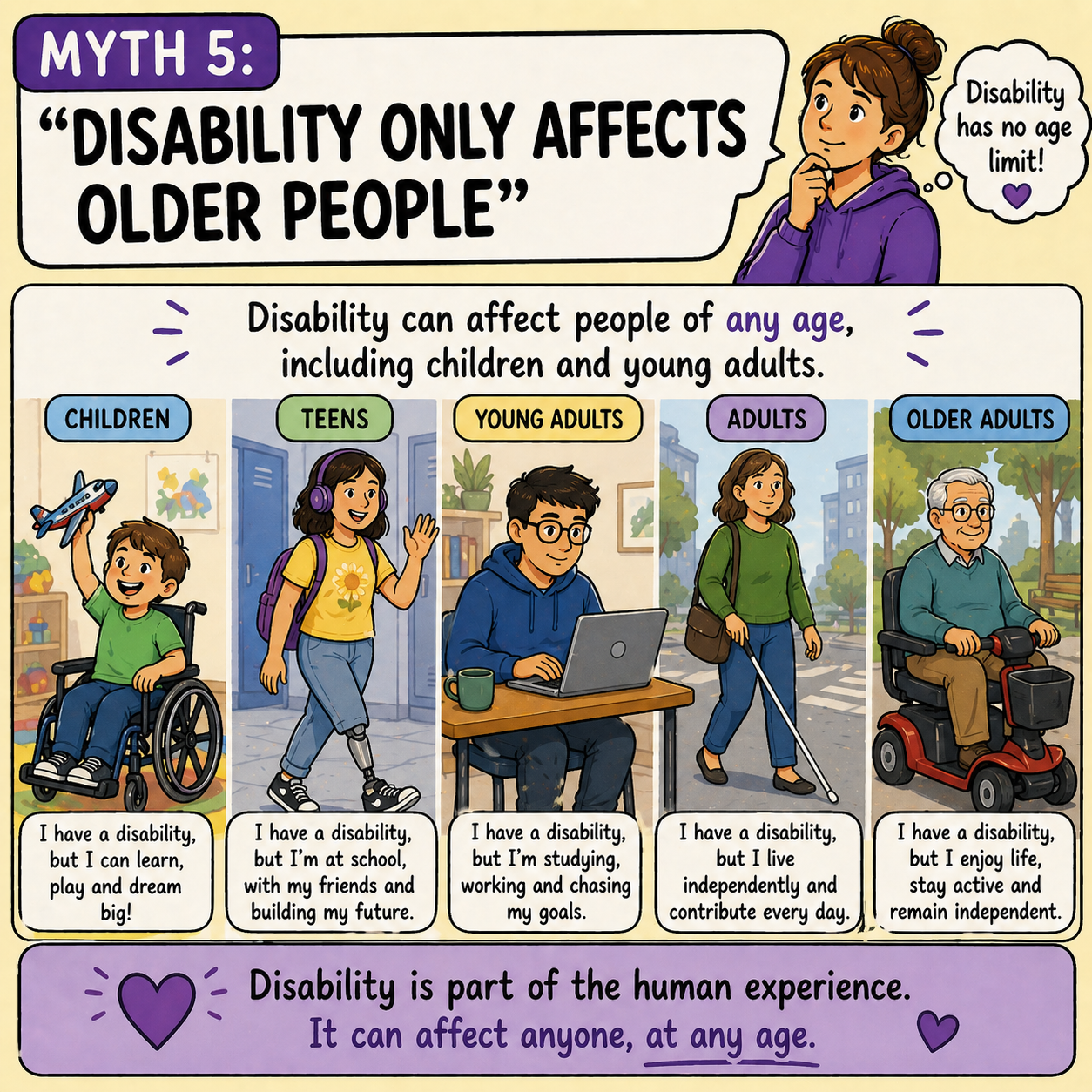
The idea that disability only affects older people is a misconception, as disability can impact individuals at any stage of life, including children, teenagers, and young adults.
People with disabilities are learning, socialising, working, and building their futures just like anyone else, while also navigating their own unique experiences.
Disability is part of the human experience and does not define a person’s potential, independence, or ability to contribute to society.
Recognising this helps create a more inclusive world that supports people of all ages.